



Save $-29.99

POTTY
Shop our POTTY products below
Loading...











Potty Training: Ergonomics of Elimination
Success in potty training is often a matter of physical leverage. Physiologically, the human body eliminates best in a squatting position. baby enRoute selects training tools from BabyBjörn and Beaba that engineer this posture through high backrests and stable floor grips, allowing the child to relax their pelvic floor muscles effectively.
System Type: Floor Potty vs. Seat Reducer
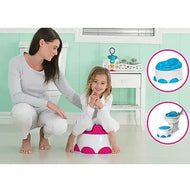
The choice between a standalone floor potty and a toilet seat reducer depends on the child's size and confidence. A floor potty is typically recommended for early training because the child's feet are firmly planted on the ground, providing security. A seat reducer is the preferred direction for older toddlers, integrating them into the family bathroom routine, provided it is paired with a stable step stool.
Sanitation Engineering
Ease of cleaning is the primary design constraint for parents. We look for potties with removable inner bowls and "splash guards" that are integrated into the mold. A high, seamless splash guard is a non-negotiable feature for boys, preventing mess and directing flow into the basin.
Frequently Asked Questions
Q: When is a child physically ready for potty training?
A: Scenario: Observing developmental signs.
Recommendation: Look for the ability to stay dry for 2 hours.
Reason: This indicates that the bladder muscles have developed enough control to hold urine, a prerequisite for successful training.
Q: Why choose a simple potty over one with lights and sounds?
A: Scenario: Creating a focused environment.
Recommendation: Simple, ergonomic designs are often superior.
Reason: Elimination is a biological function, not a game; distraction-free tools help the child focus on body signals rather than entertainment.